Wednesday, June 18, 2014

A Real Page Turner

 Now we have got past the hurdle of so many names and acronyms, the Saturday Readers are now completely engrossed in the two stories of Restless and seem to have spent sleepless nights trying to work out how the two might be linked. Some of us are biting our tongues in order not to spoil the surprise(s) whilst others are enthralled by various theories involving, among other things, the identity of Ruth's father. The only solution is to carry on reading. Perhaps we should also heed Romer's first rule: trust no one. Especially the author.

On both occasions that we have met to discuss Restless, we've commented on the sang froid of Eva, and also of Ruth. We agreed that mother and daughter are undeniably similar in the way that they deal with their emotions and personal relationships. There is one obvious contrast however. Eva / Sally is able to effortlessly manipulate those around her, even her own daughter whilst Ruth seems incapable of such machinations. Obviously Eva had her training both theoretical and practical to hone these skills whilst Ruth has simply had her life experiences. One wonders how good a spy Ruth would have become, given the appropriate training. Towards the end of the novel we see this possibility played out,  a certain paranoia seems to have taken over her.Her suspicions of Hamid's friends, her  misjudgement  of Hamid himself, her drunken declaration of Frobisher's invitation with the police to collaborate.

'Because you can tell me, Hamid,' I said, softly, leaning closer. 'I'm going to be working with the police, you see, they want me to help them. You can tell me.'


Does Ruth also want a piece of the action, or are her suspicions simply an extension of her mother's, and a result of her manipulation? We discussed the reasons why Sal  insists on giving Ruth her story in episodes. As a literary device used by the author, it serves the double purpose of creating cliffhanger situations for both Ruth as a character and us the reader. For Ruth this is complicated. Is she reading the truth of the mother she thought she knew, or is it the delusions of an elderly woman? As readers, free of Ruth's responsibilities, we can sit back and enjoy, for Ruth it is  bewildering, frightening. She tells  her friend Veronica about her mother's revelations.

'The act of telling it would make the new facts in my life more real for me - easier to confront ... I needed one extra-familial buttress to hold me steady.' 

Veronica, a nurse, questions Ruth on her mother's bizarre behaviour,but can draw no conclusions.

'But otherwise she seems perfectly normal?'

'Define "normal",' I said.'


Once again we commented on the earth-shattering nature of Sal's bombshell.  Various book group discussion lists contain the same question in relation to Restless:

How well do we truly know someone? 


Here's William Boyd talking about being a traitor, not knowing your parents, the setting of Middle Ashton and plenty more.  


Some Links

Here are some links to interviews, trailers and reviews relating to Restless.

Let's start off with some interviews with the author, William Boyd.


Here he is talking about British spies in the USA, and about how we are all restless, spy or not.


And here about his childhood and his writing habits.


And here, more about his writing habits and why he keeps his manuscripts in the fridge


This is about adapting the novel for television and how he changed and invented events in order to create a successful adaptation.


Finally here are the trailers for the BBC adaptation of Restless


Episode 1


Episode 2


Here is a Guardian review of the novel and here is a Telegraph review of the adaptation. Notice there are some further links in the Telegraph review.


Thursday, May 29, 2014

Acronyms Ltd


Below is a list of organisations and acronyms we've come across so far.

Action Francaise - a far right political movement begun in 1899. During WW2 it supported the Vichy Regime. Kolia is killed after leaving a meeting by the leader Charles Maurras. According to Romer, Kolia had joined the movement in order to infiltrate it.

AAS (also referred to as ASS Ltd) - 'Almost an embarrassing acronym, I know, but it stands for Actuarial and Accountancy Services.'


'Very boring.'


'Exactly.' "

AAS is the unit which Romer runs, known to the outside world as Agence Nadal, then Transoceanic in USA.

'We're not really SIS to be precise, he said. 'My team - AAS - is officially part of GC&GS.' "


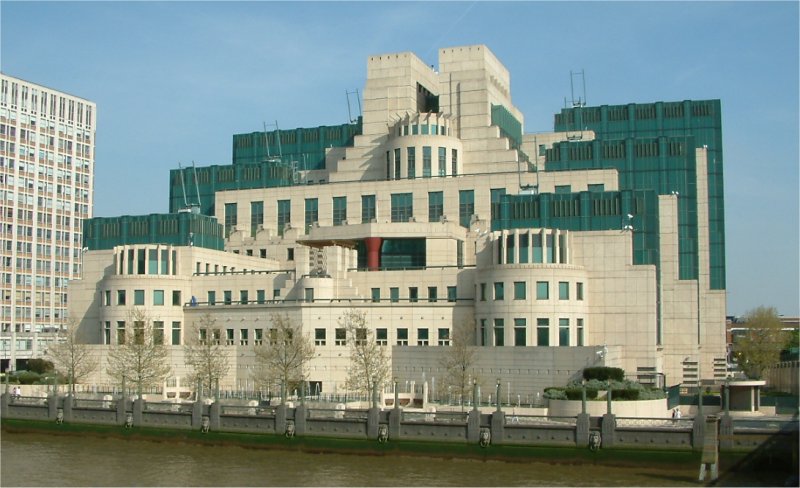
SIS - Secret Intelligence Service- MI6  foreign intelligence agency


SIS Headquarters. Vauxhall Cross, London
Copyright: Tagishsimon

Here's the official SIS website - has a good section on the organisation's history, and you can apply to become an intelligence officer!


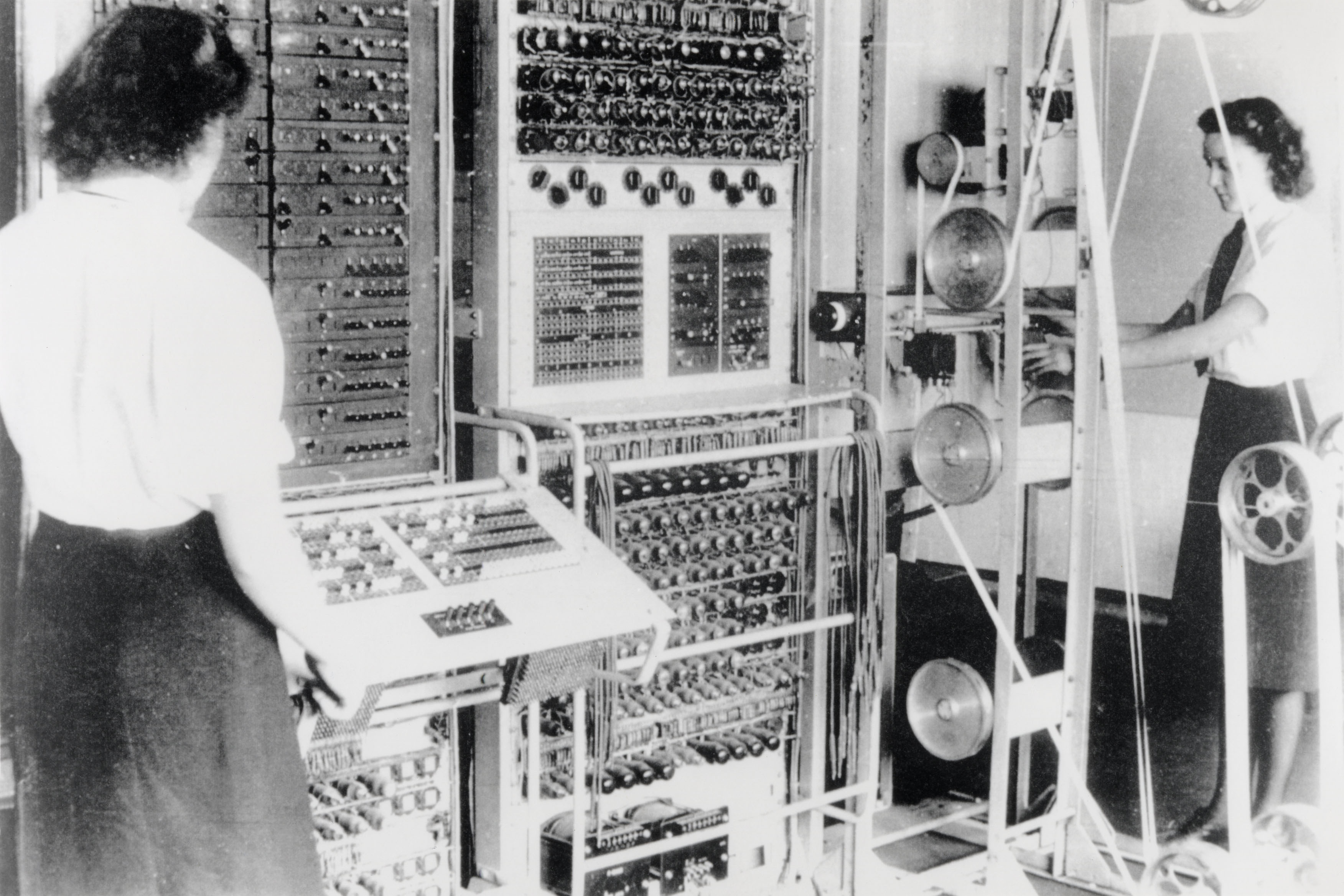
GC&GS - Government Code and Cipher School. During WW2 work involved decrypting enemy messages.

Mark 2 Colossus computer, used to decrypt messages


Here's a link to the official history page of GCHQ, as it is now known.

Political Warfare department -  Romer's unit, Eve supposes is part of this department, their job being ' feeding clever and clever false information out into the world - through the medium of a small Belgium press agency - and nobody really knew what the effect might be.'

Sicherheitsdienst - ( also SD ) intelligence agency of the nazi party. 'What a coup for the Sicherheitsdienst - they must be amazed how it was so easy to hoodwink and capture two senior British agents and whisk them across the the border.' Romer's scornful comment on lack of professionalism among British agents.


Morris also mentions them later on, after Las Cruces. He also mentions Abwehr - a German intelligence gathering agency.

NBC - National Broadcasting Company, whose headquarters are in the Rockefeller Centre, New York City. Wilbur Johnson, owner of one of the radio stations Eve runs, thinks she works for NBC.

BSC - British Security Coordination. Also operated from the Rockefeller Centre. Going under the cover of the British Passport Control Office, BSC was set up to monitor enemy activity in America, and motivate pro-British opinion with the aim of getting America to join the Allies. This they did by feeding  / planting false information to the media.

The Irregulars by Jennet Conant covers this covert operation in great detail, focusing on the involvement of Roald Dahl and his circle.

Here is Jennet Conant discussing her book.


America First - a huge lobby group that campaigned against America going into WW2. It closed shortly after Pearl Harbour. One of the unit's successes is that they get an America First meeting closed by planting photographs of Hitler in the organisers' offices.

NKVD - The People's Commissariat for Internal Affairs. A law enforcement agency close to the Soviet secret police. Aleksandr Nekich was a defected NKVD Officer.

Here is a memorial site dedicated to the crimes and victims of the regime.

Tass - Telegraph Agency of the Soviet Union. Eve sometimes feeds false information to Tass correspondents.


RAF - Red Army Faction. Also referred to as Baader-Meinhof. Ruth suspects that Ludger and Ilse might be involved, especially when Ludger claims he met Andreas Baader whilst acting in porno films.

SAVAK - Organization of Intelligence and National Security. The secret police and intelligence service operating in Iran in the 1970s under the Shah. Ruth makes some unfortunate comments to Hamid about SAVAK - his brother was killed by them.


Tuesday, May 27, 2014

Names


Here is a list of characters, I've tried to group them logically / chronologically. Let's start off with the main character:

Eva Delectorskaya becomes Eve Dalton in 1939, also Margery Allerdice and Lily Fitzroy. we meet Eve first as mother and grandmother Sally Gilmartin. Other name changes come later.

Oxford 1976

Ruth Gilmartin - Sally Gilmartin's daughter

Jochen - her son

Ruth's students

Hugues Corbillard

Bérangère Wu

Hamid Kazemi 

The Amberson family - fictional family talked about in Ruth's lessons

Karl-Heinz - Jochen's father

Ludger - Karl-Heinz's brother

Ilse - a friend of Ludger

Veronica Briggstock - fellow single mother from the nursery Grindles

Averil - Veronica's daughter and Jochen's best friend

Mr Scott - Ruth's landlord and dentist

Robert York - Ruth's PHD supervisor

Sean Gilmartin - Ruth's deceased father

Alisdair - Sally's deceased brother

Paris 1939

Kolia - Eva's deceased brother

Sergei Pavlovitch Delectoski - Eva & Kolia's father

Irène Argenton - Sergei's second wife

Maria / Masha - Eva & Kolia's mother, died 1929 in Tienstin, China

Mr Frellon - Eva's boss in Paris 

Lucas Romer - Kolia worked for him, he recruits Eva. 

Baron Mansfield of Hampton Cleeve - Romer's later title

Scotland 1939

Staff Sergeant Law - runs Lyne Manor

Evans - Law's stand-in

Others training / observing in Lyne Manor

Jerzy - a Polish man

Mrs Diana Terme

Dennis Trelawny

Ostend

Team at Agence d'Information Nadal

Silvia Rhys Meyer - Eve's work and flat mate

Morris Devereux

Angus Woolf

Alfie Bythswood

Higher up the spy scale

C

Mr X

Prenslo

Lt. Joos -  Dutch intelligence officer

2 British Agents - not named

A bald young man

Some Germans


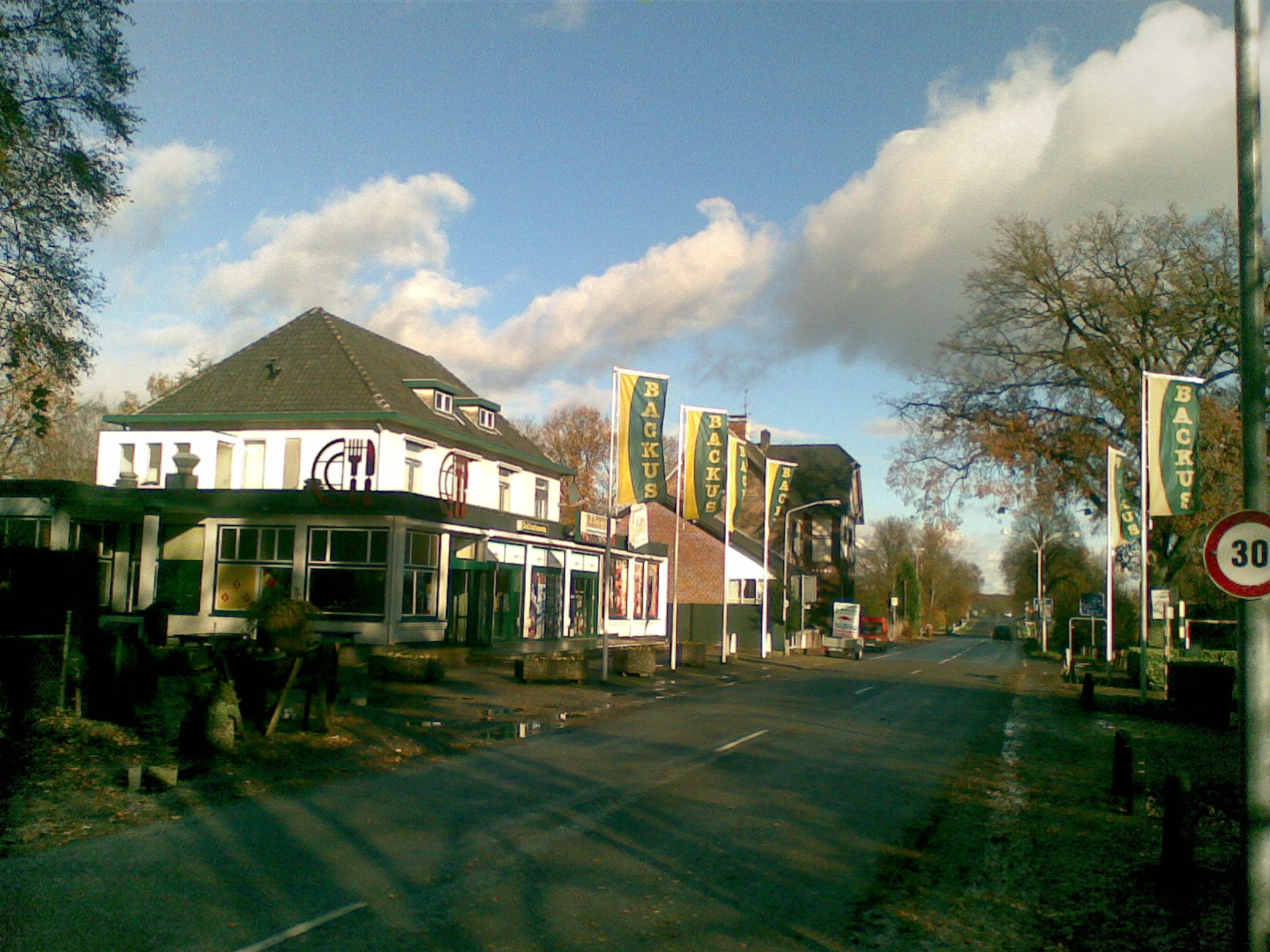
Cafe Backus, Prenslo


London 1940

Deirdre - administrator / secretary of AAS ( Actuarial & Accountancy Services)

The same team as in Ostend

Mrs Dangerfield - Lily Fitzroy's ( ie Eve's) landlady in Battersea

Also mentioned

Jean-Didier - a previous lover of Eve, musician friend of Kolia


USA

Wilber Johnson - owner - manager of WNLR, a radio station that Eve runs

Paul Witoldski - manager of other radio station near Canadian boarder she runs

Transoceanic Press (Agence Nadal in disguise)

Same team as in Ostend and London

Aleksandr Nekich - professor at John Hopkins University. really a defected NKVD officer. He dies before Morris Devereux can meet him.

Next time acronyms and organisations

Meanwhile, here is an excerpt from an interview with William Boyd from the website Gransnet. It gives some historical background on what happened at Prenslo, although I've edited out a tiny bit so as not to spoil the surprise!  
Q: I think the Prenslo incident in the book is based on the real-life Venlo incident on the Dutch-German border? I wanted to ask why the agent gave Eva the wrong code word? Surely if it was all a set-up he would have given her the one she was expecting? I know this is a point of detail but it is really bothering me! 
And why does her explanation have such a positive impact on the top brass? The Brits were duped and it's hard to see why the fact the agent said Amsterdam rather than Paris (or possibly the other way round) would have improved the situation. flopsybunny
A: Yes, you're absolutely right. The Venlo incident was a massive secret service cock-up (and has been brushed far under the carpet). You could argue that there was a mole in the Dutch secret service (it was a combined operation) that allowed the Germans to snatch two top british spies at Venlo. In my "Prenslo" version I wanted Eva to sense something was going wrong. The Dutch agent had been wrongly briefed on the double-password. The sort of error that can so easily happen during operations.
The Venlo incident was a disaster for the British at the start of the war. Their whole spy network in northern Europe was compromised by this kidnapping. Hence all the fuss by the top brass.

Careful if you read the whole interview!

Here is a link to a more detailed explanation of Venlo


Monday, May 26, 2014

Restless


This is just a quick post to say that the Saturday Readers have chosen a new book to read and talk about. There were requests for mystery, suspense and action; and after some deliberation we have chosen Restless by William Boyd and are already immersed in spy training, pseudonyms and rumours.

A list of names and acronyms will follow shortly. Meanwhile, Here is the link to William Boyd's official website.


And here is an excerpt from the audio-book, read by Rosemund Pike to get us going.


Everything Changes


It is time to leave Mrs Haddock on her third rum, let Ursula and those around her rest from their innumerable lives. We can always come back. They will always be there, ready to start again. Or will they? As Ursula finds out ' even the instability of time was not to be relied upon.' 

Perhaps next time we shall meet Guy and learn his story. Wouldn't that be wonderful?

I can't emphasise enough how pleasing rereading Life After Life with the Saturday Readers has been. The book is dripping with cross references and oozing with cultural details that I just didn't get the first time round. Like Ursula I need to relive my experiences to do better. There is still so much to talk and write about: the clubs Jimmy takes Ursula to, her experiences in Berlin in 1945, being a mother, food, Hugh and Sylvie's relationship, Pammy...

Here is a fantastic collection of food references from the novel.

This is an interesting review and literary inspired recipe.

Find more Life After Life images here.

Finally, some words from Kate Atkinson.

Latest news here  - an upcoming interview, awards, adaptations...


Time presses on in this life, we turn the pages and close the cover for now.


Late 19th century silver hare. Antiques Atlas


'Memories are sometimes in the future.'


Another Tot of Rum


Sign for The Blue Lion, Gray's Inn Road. WC1
Copyright Mike Quinn. Licensed for further reuse.

There is no Blue Lion near  Chalfont St Peter, only a Red Lion in Beaconsfield. Is this where Mrs Haddock sits , eternally sipping?

I love the fact that Life After Life ends with Mrs Haddock, the midwife,  forever stuck in the Blue Lion sipping hot rum. as the landlord says

'You won't be going anywhere in a hurry tonight.'


And indeed she never does. It's interesting how some characters are fixed firmly in one place ( Mrs Haddock) or on one time-strand (Mrs Glover and her son George, Fred Smith, Pamela or Maurice) whereas others experience permutations of varying degrees ( Izzie, Sylvie). For some of them these different life-routes are a matter of life or death. Think of Nancy and Teddy, Bridget and Clarence Dodd. What about Roland, Izzie's son? In one life-route he is lost forever in Germany.

'The little Fritz. 'Couldn't we try and find him? Sylvie asked. 'Needle in a haystack,' Hugh said. 'The Hun are legion.'

Later on we discover another possibility: Roland is born at Fox Corner and absorbed into the Todd family.However, he, instead of Ursula, drowns in the sea at Cornwall. and yet he doesn't get another chance at life. One wonders about the possibilities of his German life. Was he also 'a simpleton' in that one? And what if he was? Under Hitler this would not bode well. 

Later Izzie torments herself that her son is either the enemy, 'dead or going to die' or that Hugh might have given her baby to a Jewish family. His life-route is subject to decisions made hastily by others. The butterfly effect has cruel wings.


Then there is, of course, Ursula. Perplexed and tormented by her reoccurring time-strands until, with the help of Dr Kellet, she finally becomes mistress of her life-route, there is so much to say about her. And yet Saturday Readers seemed to spend more time discussing  the effects of her actions, and other characters rather than Ursula herself. We did talk about her motivation for what she did. Personally I found Ursula a difficult character to grasp. I have no mental image of her, and yet even though physical descriptions are sparsely scattered in Life After Life, I have a clear picture of most other characters.

Perhaps it is because she  has such extraordinary experiences in such a familiar, well-known setting. For me such a person cannot be real, she remains something of a ghost, however much I admire her absolute determination and bravery. I find her the saddest character, she gives so much and suffers so hard for those she loves and yet she seems to receive so little back. For all the emotions and sacrifices she makes I find her detached from those around her. Although,  this might be understandable given her extraordinary circumstances. Towards the end of the novel, after Ursula has recovered from her nervous crisis brought on by the epiphany about her life, Ursula makes a plan and a vow. 

'Her heart swelled with the high holiness of it all. Imminence was all around.she was both warrior and shining spear. She was a sword glinting in the depths of night, a lance of light piercing the darkness. There would be no mistakes this time.'    


Admiration grows at her resolve and courage.

'She opened her arms to the black bat and they flew to each other, embracing in the air like long-lost souls. This is love, Ursula thought. And the practice of it makes it perfect.'

This last phrase is also uttered by Sylvie and provoked discussion of 'what if?' questions among the Saturday Readers. How much does Sylvie know, or realise? We can see that over Ursula's successive births Sylvie reacts differently, knowingly. What are her motivations?

Does Sylvie have her own life-routes, or are they simply a butterfly effect of Ursula's? she certainly seems to have some awareness of the situation, at least when it come to Ursula's birth. Yet there are other events where she could have reacted or stepped in to help Ursula ( think of Howie, Derek...)and never does. Once they are out of babyhood Sylvie cannot be accused of being over-protective of her children. An observant Saturday Reader pointed out that perhaps it is necessary for Ursula to experience these events in order to grow, to be able to then carry out her plan. Very much a case of 'Become such as you are, having learned what that is.' Thanks to Dr Kellet's introduction to Pindar, via Nietzsche, she learns to understand, to store her experiences, to do better next time round.

'Practice makes perfect' 
  
That leaves Teddy. Another point of discussion. Our conclusion was that surely he knows something? Why turn and look at Roy as his plane goes down? What is the significance of his 'Thank you' to Ursula across the noisy pub? What is he thanking Ursula for? 

It is telling, surely, that it is Teddy who ponders the idea of having the opportunity to try and try again. He is quoted in the preface, along with Nietzsche and Plato. 

Is Teddy Ursula's ultimate motivation? 

We can't finish talking about the various time-strands and life-routes without briefly mentioning the central question of Hitler and the possibilities and repercussions, had he been removed from history. The idea is discussed by a number of characters, and, early on,  the Saturday Readers came to the same conclusion as the author: war would not have been avoided although it might have had different results for individuals. All thanks to Ursula, of course.

Here is an interesting review of Life After Life, from a Counterfactual point of view.