Tuesday, May 27, 2014

Names


Here is a list of characters, I've tried to group them logically / chronologically. Let's start off with the main character:

Eva Delectorskaya becomes Eve Dalton in 1939, also Margery Allerdice and Lily Fitzroy. we meet Eve first as mother and grandmother Sally Gilmartin. Other name changes come later.

Oxford 1976

Ruth Gilmartin - Sally Gilmartin's daughter

Jochen - her son

Ruth's students

Hugues Corbillard

Bérangère Wu

Hamid Kazemi 

The Amberson family - fictional family talked about in Ruth's lessons

Karl-Heinz - Jochen's father

Ludger - Karl-Heinz's brother

Ilse - a friend of Ludger

Veronica Briggstock - fellow single mother from the nursery Grindles

Averil - Veronica's daughter and Jochen's best friend

Mr Scott - Ruth's landlord and dentist

Robert York - Ruth's PHD supervisor

Sean Gilmartin - Ruth's deceased father

Alisdair - Sally's deceased brother

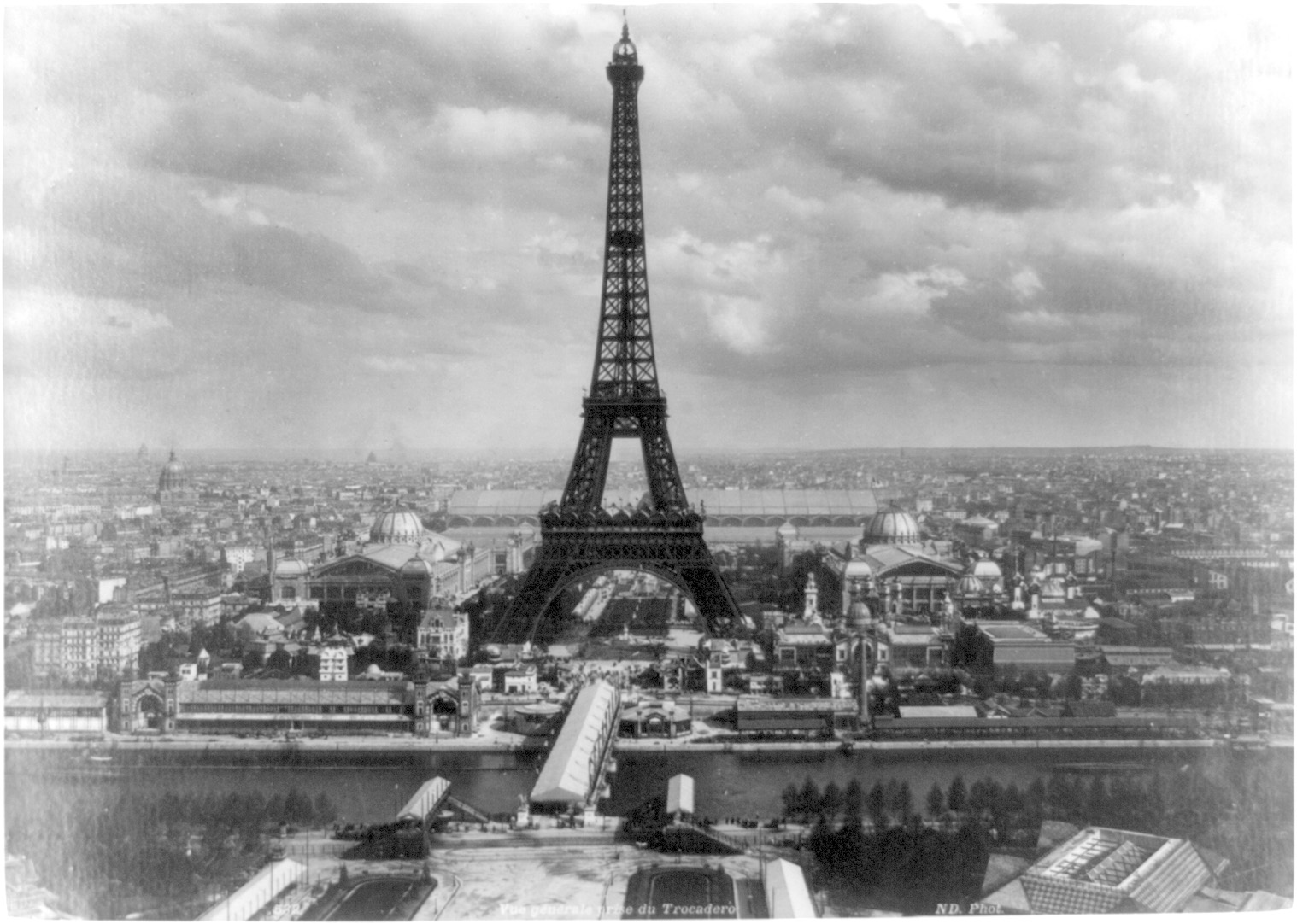
Paris 1939

Kolia - Eva's deceased brother

Sergei Pavlovitch Delectoski - Eva & Kolia's father

Irène Argenton - Sergei's second wife

Maria / Masha - Eva & Kolia's mother, died 1929 in Tienstin, China

Mr Frellon - Eva's boss in Paris 

Lucas Romer - Kolia worked for him, he recruits Eva. 

Baron Mansfield of Hampton Cleeve - Romer's later title

Scotland 1939

Staff Sergeant Law - runs Lyne Manor

Evans - Law's stand-in

Others training / observing in Lyne Manor

Jerzy - a Polish man

Mrs Diana Terme

Dennis Trelawny

Ostend

Team at Agence d'Information Nadal

Silvia Rhys Meyer - Eve's work and flat mate

Morris Devereux

Angus Woolf

Alfie Bythswood

Higher up the spy scale

C

Mr X

Prenslo

Lt. Joos -  Dutch intelligence officer

2 British Agents - not named

A bald young man

Some Germans
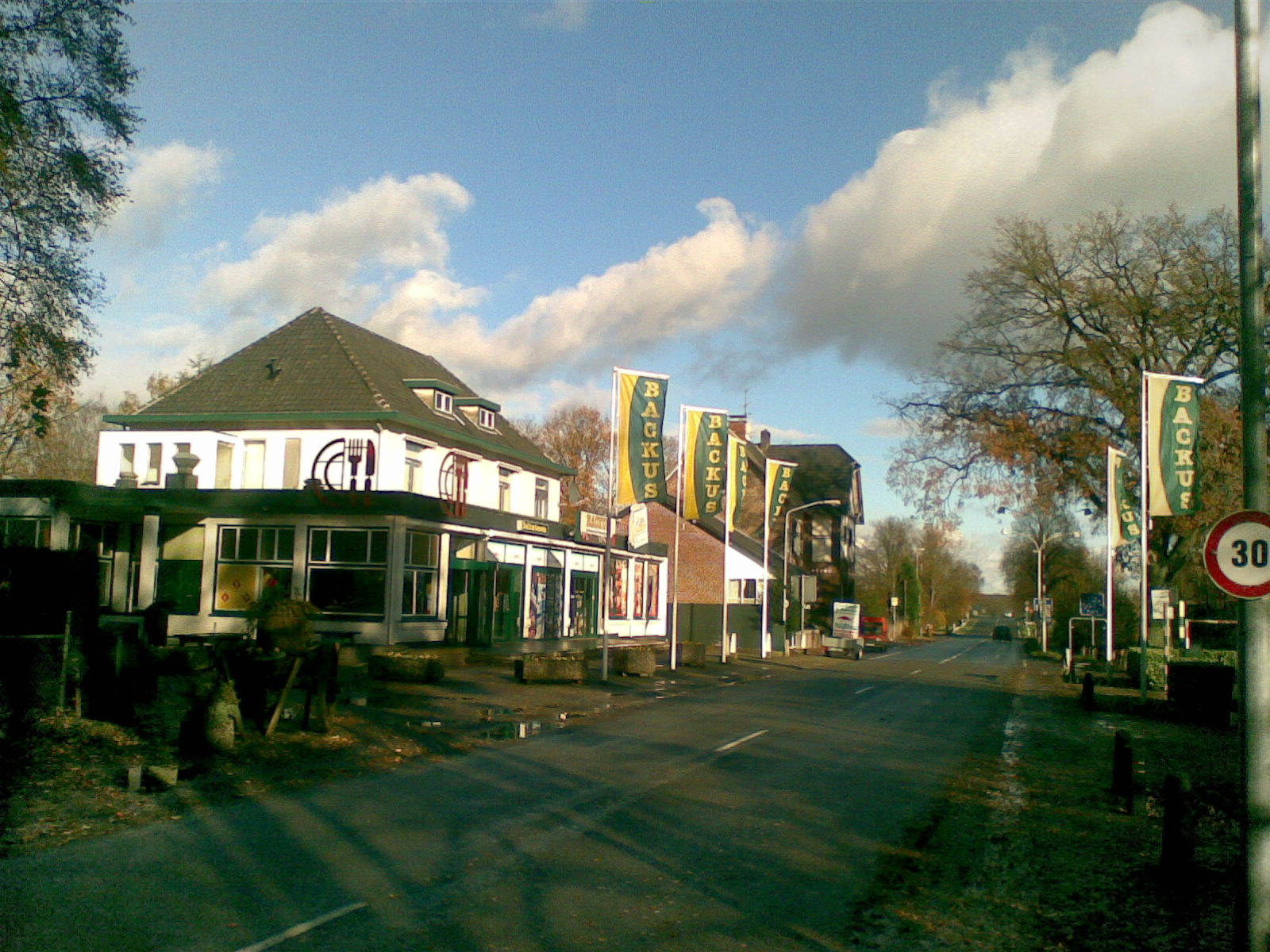

Cafe Backus, Prenslo


London 1940

Deirdre - administrator / secretary of AAS ( Actuarial & Accountancy Services)

The same team as in Ostend

Mrs Dangerfield - Lily Fitzroy's ( ie Eve's) landlady in Battersea

Also mentioned

Jean-Didier - a previous lover of Eve, musician friend of Kolia


USA

Wilber Johnson - owner - manager of WNLR, a radio station that Eve runs

Paul Witoldski - manager of other radio station near Canadian boarder she runs

Transoceanic Press (Agence Nadal in disguise)

Same team as in Ostend and London

Aleksandr Nekich - professor at John Hopkins University. really a defected NKVD officer. He dies before Morris Devereux can meet him.

Next time acronyms and organisations

Meanwhile, here is an excerpt from an interview with William Boyd from the website Gransnet. It gives some historical background on what happened at Prenslo, although I've edited out a tiny bit so as not to spoil the surprise!  
Q: I think the Prenslo incident in the book is based on the real-life Venlo incident on the Dutch-German border? I wanted to ask why the agent gave Eva the wrong code word? Surely if it was all a set-up he would have given her the one she was expecting? I know this is a point of detail but it is really bothering me! 
And why does her explanation have such a positive impact on the top brass? The Brits were duped and it's hard to see why the fact the agent said Amsterdam rather than Paris (or possibly the other way round) would have improved the situation. flopsybunny
A: Yes, you're absolutely right. The Venlo incident was a massive secret service cock-up (and has been brushed far under the carpet). You could argue that there was a mole in the Dutch secret service (it was a combined operation) that allowed the Germans to snatch two top british spies at Venlo. In my "Prenslo" version I wanted Eva to sense something was going wrong. The Dutch agent had been wrongly briefed on the double-password. The sort of error that can so easily happen during operations.
The Venlo incident was a disaster for the British at the start of the war. Their whole spy network in northern Europe was compromised by this kidnapping. Hence all the fuss by the top brass.

Careful if you read the whole interview!

Here is a link to a more detailed explanation of Venlo


Monday, May 26, 2014

Restless


This is just a quick post to say that the Saturday Readers have chosen a new book to read and talk about. There were requests for mystery, suspense and action; and after some deliberation we have chosen Restless by William Boyd and are already immersed in spy training, pseudonyms and rumours.

A list of names and acronyms will follow shortly. Meanwhile, Here is the link to William Boyd's official website.


And here is an excerpt from the audio-book, read by Rosemund Pike to get us going.


Everything Changes


It is time to leave Mrs Haddock on her third rum, let Ursula and those around her rest from their innumerable lives. We can always come back. They will always be there, ready to start again. Or will they? As Ursula finds out ' even the instability of time was not to be relied upon.' 

Perhaps next time we shall meet Guy and learn his story. Wouldn't that be wonderful?

I can't emphasise enough how pleasing rereading Life After Life with the Saturday Readers has been. The book is dripping with cross references and oozing with cultural details that I just didn't get the first time round. Like Ursula I need to relive my experiences to do better. There is still so much to talk and write about: the clubs Jimmy takes Ursula to, her experiences in Berlin in 1945, being a mother, food, Hugh and Sylvie's relationship, Pammy...

Here is a fantastic collection of food references from the novel.

This is an interesting review and literary inspired recipe.

Find more Life After Life images here.

Finally, some words from Kate Atkinson.

Latest news here  - an upcoming interview, awards, adaptations...


Time presses on in this life, we turn the pages and close the cover for now.


Late 19th century silver hare. Antiques Atlas


'Memories are sometimes in the future.'


Another Tot of Rum


Sign for The Blue Lion, Gray's Inn Road. WC1
Copyright Mike Quinn. Licensed for further reuse.

There is no Blue Lion near  Chalfont St Peter, only a Red Lion in Beaconsfield. Is this where Mrs Haddock sits , eternally sipping?

I love the fact that Life After Life ends with Mrs Haddock, the midwife,  forever stuck in the Blue Lion sipping hot rum. as the landlord says

'You won't be going anywhere in a hurry tonight.'


And indeed she never does. It's interesting how some characters are fixed firmly in one place ( Mrs Haddock) or on one time-strand (Mrs Glover and her son George, Fred Smith, Pamela or Maurice) whereas others experience permutations of varying degrees ( Izzie, Sylvie). For some of them these different life-routes are a matter of life or death. Think of Nancy and Teddy, Bridget and Clarence Dodd. What about Roland, Izzie's son? In one life-route he is lost forever in Germany.

'The little Fritz. 'Couldn't we try and find him? Sylvie asked. 'Needle in a haystack,' Hugh said. 'The Hun are legion.'

Later on we discover another possibility: Roland is born at Fox Corner and absorbed into the Todd family.However, he, instead of Ursula, drowns in the sea at Cornwall. and yet he doesn't get another chance at life. One wonders about the possibilities of his German life. Was he also 'a simpleton' in that one? And what if he was? Under Hitler this would not bode well. 

Later Izzie torments herself that her son is either the enemy, 'dead or going to die' or that Hugh might have given her baby to a Jewish family. His life-route is subject to decisions made hastily by others. The butterfly effect has cruel wings.


Then there is, of course, Ursula. Perplexed and tormented by her reoccurring time-strands until, with the help of Dr Kellet, she finally becomes mistress of her life-route, there is so much to say about her. And yet Saturday Readers seemed to spend more time discussing  the effects of her actions, and other characters rather than Ursula herself. We did talk about her motivation for what she did. Personally I found Ursula a difficult character to grasp. I have no mental image of her, and yet even though physical descriptions are sparsely scattered in Life After Life, I have a clear picture of most other characters.

Perhaps it is because she  has such extraordinary experiences in such a familiar, well-known setting. For me such a person cannot be real, she remains something of a ghost, however much I admire her absolute determination and bravery. I find her the saddest character, she gives so much and suffers so hard for those she loves and yet she seems to receive so little back. For all the emotions and sacrifices she makes I find her detached from those around her. Although,  this might be understandable given her extraordinary circumstances. Towards the end of the novel, after Ursula has recovered from her nervous crisis brought on by the epiphany about her life, Ursula makes a plan and a vow. 

'Her heart swelled with the high holiness of it all. Imminence was all around.she was both warrior and shining spear. She was a sword glinting in the depths of night, a lance of light piercing the darkness. There would be no mistakes this time.'    


Admiration grows at her resolve and courage.

'She opened her arms to the black bat and they flew to each other, embracing in the air like long-lost souls. This is love, Ursula thought. And the practice of it makes it perfect.'

This last phrase is also uttered by Sylvie and provoked discussion of 'what if?' questions among the Saturday Readers. How much does Sylvie know, or realise? We can see that over Ursula's successive births Sylvie reacts differently, knowingly. What are her motivations?

Does Sylvie have her own life-routes, or are they simply a butterfly effect of Ursula's? she certainly seems to have some awareness of the situation, at least when it come to Ursula's birth. Yet there are other events where she could have reacted or stepped in to help Ursula ( think of Howie, Derek...)and never does. Once they are out of babyhood Sylvie cannot be accused of being over-protective of her children. An observant Saturday Reader pointed out that perhaps it is necessary for Ursula to experience these events in order to grow, to be able to then carry out her plan. Very much a case of 'Become such as you are, having learned what that is.' Thanks to Dr Kellet's introduction to Pindar, via Nietzsche, she learns to understand, to store her experiences, to do better next time round.

'Practice makes perfect' 
  
That leaves Teddy. Another point of discussion. Our conclusion was that surely he knows something? Why turn and look at Roy as his plane goes down? What is the significance of his 'Thank you' to Ursula across the noisy pub? What is he thanking Ursula for? 

It is telling, surely, that it is Teddy who ponders the idea of having the opportunity to try and try again. He is quoted in the preface, along with Nietzsche and Plato. 

Is Teddy Ursula's ultimate motivation? 

We can't finish talking about the various time-strands and life-routes without briefly mentioning the central question of Hitler and the possibilities and repercussions, had he been removed from history. The idea is discussed by a number of characters, and, early on,  the Saturday Readers came to the same conclusion as the author: war would not have been avoided although it might have had different results for individuals. All thanks to Ursula, of course.

Here is an interesting review of Life After Life, from a Counterfactual point of view. 


Wednesday, May 14, 2014

Music and the Blitz


Listen to the Air Raid Siren and the All Clear


Ursula's Air Raid Patrol unit sometimes entertain themselves during the lull between bombings by singing together or performing for each other.  Perhaps all is in an effort to block out the disturbing and traumatic experiences of night patrol. 

One member of the patrol group, Mr Armitage, is an opera singer who sings 'just the popular arias' for them.


La donna è mobile from Rigoletto by Verdi, sung by The Three Tenors


Largo al factotum from the Barber of Seville by Rossini, sung by John Rawnsley


Mr Bullock, who connects us to another side of London life, prefers Al Bowlly.


How was John Bullock to know that in April 1941 Al Bowlly would be killed in an explosion at his home in Duke's Street? He was buried in a mass grave with other bomb victims.


Ironically, the last song he recorded, two weeks before his death, was a satirical number by Irving Berlin about Hitler called When That Man is Dead and Gone. The footage here reminds me of Ursula in Germany, when she accompanies Klara and her sisters to watch Hitler's cavalcade en route to Berchtesgaden.


Mis Woolf accompanies  Mr Armitage on the rediscovered piano.


Non più andrai from The Marriage of Figaro, performed by Bryn Terfel

Then Mr Armitage continues by himself.


'How versatile he is,' Miss Woolf said, 'I always thought that was a woman's aria'


Travis Pratt sings O Mio Babbino Caro, from Gianni Schicchi by Puccini


'It's funny, isn't it,' Miss Woolf whispered in Ursula's ear, 'how much German music we listen to. Great beauty transcends all. Perhaps after the war it will heal all too. Think of the choral symphony - Alle Menschen werden Brüder.'


Alle Menschen werden Brüder - All Men Shall Become Brothers

Symphony No. 9 Beethoven. Flashmob performance 


Finally, Herr Zimmerman's performance of Bach's Sonata in G minor, which moves Ursula to think about her father, Hugh.


Bach Violin Sonata in G Minor, performed by Yehudi Menuhin


'When the music stopped there was a moment of pure, profound silence, as if the world had stopped breathing'

The concert is cut short, of course, by a air raid warning.

Click here to visit bombsite.org

This site shows you every bomb dropped during the London Blitz. You can check for yourself Argyll Street, Phillimore Gardens or any where else you care to...

'And Westminster Abbey, the Houses of Parliament, De Gaulle's headquarters, the Mint, the Law Courts. She had seen St Clement Dane's herself - blazing like a monstrous chimney fire on the Strand. And all the ordinary people living their precious ordinary lives in Bermondsey, Islington, Southwark. The list went on and on.'

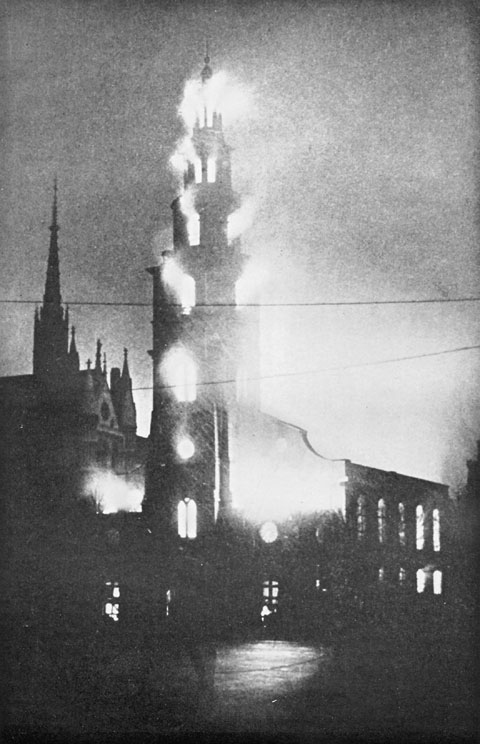
For example, on just one night, 10-11 May 1941, 86,000 incendiary bombs were dropped on London. St Clement Danes was hit for the third time.Read about that and other incidents here. The West End at War site is an excellent source.


St Clement Danes on Fire


Here are some other Blitz related pages

EyeWitness to History

BBC History

Life - colour photos of London during the Blitz


Footage showing scenes from London


Can you see Fred?


Short documentary - London's  Longest Night

29 December 1940


A People's War. Part 1

The first of three documentaries

Monday, May 5, 2014

Music


On the last Saturday Readers meeting to discuss Life After Life we listened to some of the music mentioned in an effort to imagine the characters in situ, and to try to find out what listening to the music added to our reading experience.

The sun was almost shining in the grey Bilbao sky as Sam Browne jauntily hip-hip-hip-hoorayed his way through the soundtrack to Ursula's most horrific, sinister death of all, at the hands of Derek Oliphant.


Here is Sam Browne singing, with Ambrose and his Orchestra. 

The song was also used in the musical Me and My Girl, and in later productions one of the lines was rewritten, as opinions about what was acceptable vocabulary had changed. The recording here contains the original line.  In fact, Life After Life contains a couple of comments, both in relation to music, which would now be considered unacceptable. Howie refers to Bessie Smith as 'darkie music' Even though Izzie uses the term Negress in a factual manner  and expresses her admiration for the singer Ida Cox, today this reference would be deemed incorrect. Here, and on other occasions, Atkinson cleverly reveals to us speech and attitudes that at the time were admissible and rarely questioned or reprimanded. Even Izzie has yet to hear of political correctness.  


Incidentally there is a theory that Hip Hip Hooray was originally an anti-Semitic exclamation, meaning Jerusalem is fallen and was still used in riots against Jews in the 19th century. Read the article here.

Here is some more Sam Browne, just to set the scene. Maybe Izzie was dancing along to this at The Embassy Club (where Ambrose and his Orchestra were regular performers) whilst Ursula and Jimmy were at her house in Melbury Road, fighting Derek.


At the May Fair Hotel


All of Me. 1932

This one is accompanied by some fantastic photographs and images.

Although I think Izzie would find this rather tame, considering the music she listens to at home. 

Here is some of the music that Izzie likes and encourages Ursula to listen to. The great contrast to the music Sylvie and Hugh listen to is shown when Izzie presents Ursula with a recording of Bessie Smith singing the St Louis Blues.


Again, some wonderful images accompany this.

'Bessie Smith was on her third go round and Hugh said, 'It begins to grow on one after a while.'

I get the feeling he's being polite and would much rather listen to Elgar or The Mikado - his favourite apparently...


This version was directed by Jonathan Miller in 1987, featuring Eric Idle from Monty Python. A hugely popular production.


Here is a clip of one of the many popular songs from the opera, Three Little Maids.


Edward Elgar was a contemporary  English composer, some of whose works form part of a certain type of national identity. Here are two of his most well-known pieces. 


Pomp and Circumstance March(Land of Hope and Glory)from the Last Night of the Proms 2012


Chicago Symphony Orchestra in 1997, playing Nimrod from Enigma Variations.


'Sylvie had the long, deft fingers of an artist or a pianist' 

Of course she did. One cannot imagine her having short pudgy fingers. Can you imagine her playing this piece?


Valentina Lisitsa playing "Heroic" Polonaise op 53 A flat major.


I think it is a little bit robust for Sylvie, perhaps this is more her style...


Nocturna op 9 No 2


Or maybe this well-known piece. I like the background fuzz on this recording. Close your eyes, listen and imagine yourself in the drawing room at Fox Corner.


 Minute Waltz op 64 No 1 in D flat, played here by Rachmaninoff


Liszt is another composer Sylvie plays...


Love Dream - Liebestraum


Back to Izzie's changing musical tastes.

'They call it Honky-tonk, I believe, Izzie said.'


Ida Cox - Lawdy, Lawdy Blues


'I don't listen to that stuff any more,' Izzie said. 'It's very passé. the future lies with something a little more soigné.'


Ma Rainey - Yonder Come The Blues 1926

'An antidote to all the easy sentiment that was pouring out of the wireless.' 

For Ursula during the Blitz, anyway. Izzie has now left for America. A pity we never find out what she considers soigné.


I wonder whether she would like David Bowie's version of 'Shimmy Like my Sister Kate' Is this soigné?


Here's how it might have looked:


I just had to add this clip from Jeeves and Wooster. The set and the costumes  are wonderful, and so of the time. I keep expecting Izzie to burst open one of the doors to join in...


Next time more music from the Blitz chapters.


Wednesday, April 23, 2014

Saturday Readers ask what's with all the French?


At our penultimate Saturday morning meeting we had an animated discussion about the English and their obsession with the French. This came about because one Saturday Reader commented on the number of French phrases in Life After Life, generally bandied about by Izzie.

'She was always peppering her conversation with French words'.

froideur, très sportive, qu'ils mangent de la brioche, froideur, de rigueur, endroit, coiffeur, tout droit, J'étais un peu dérangée, passé, soigné, fainéant...


Old Frayed French Flag. Photo by fdecomite


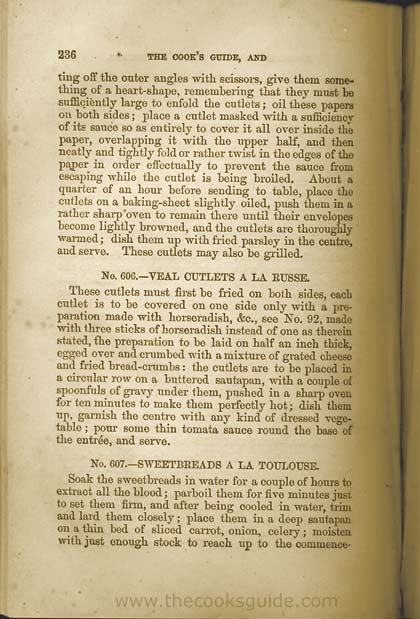
Certainly you won't find Bridget or Mrs Glover spouting out French. Maybe, at a push, if it's kitchen orientated. Different meats prepared à la Russe are a regular feature of her repertoire Even then I can imagine the frown of mistrust on Mrs Glovers face as she pronounces such foreign terms.
There are also many French terms used in the novel, generally to refer to Izzie or Sylvie.

There is the fact that Izzie flees à Paris, already enceinte by her married lover.

Sylvie and Hugh don't have a fortnight in Deauville, they have 'a delightful quizaine'


Sylvie is reminded of her luxurious life cut short every time Izzie utters something in French, also reminding them both that even though she, Izzie, has a baby and gives it away, she still goes to finishing school and then carries on doing whatever she pleases.

Izzie generally manages something in French whenever Sylvie has a dig at her. Maybe Izzie doesn't know why this irks her sister-in-law, but it is enough that it does.

'One day we must talk about what you got up to at sixteen, Isobel.'
'What?' Pamela said eagerly.
'Il n'avait pas d'importance,' Izzie said dismissively."


Izzie's child is named Roland by Sylvie, after the Song of Roland; an ancient heroic poem about  a French knight.


Sylvie's upbringing was very different to Hugh's, down to the food they ate: Hugh nursery fodder whilst his wife had enjoyed Canard à la presse.


Izzie says over lunch:
'I bet the first French words you learned were déjà vu. Poor old you.'

Izzie spatters French throughout her conversations with the young Ursula, who she describes as 'a jeune fille bien élevée', and 'Jolie et petite.'

When she refers to 'la famille' we can this to mean read Sylvie, and perhaps also Izzie's mother.


She   dismissively explains to Ursula that ' I spent some time in Paris when I was younger. And, of course the war...'


'She missed that cosy hour (tete-à-tete, he called it. More French.)'

For Ursula and Dr Kellet there is always the  matter of déjà vu to discuss.


Later, during the Blitz Ursula reads Du coté de chez Swann, the first volume of In Search of Lost Time by Proust.


On one of her meetings with Renee Miller, Ursula reflects a certain snobbism:

'...although I doubt we inhabit the same endroits, as they say.' Her French pronunciation was spot-on, how odd, Ursula thought."

Why should it be odd? Is Ursula being classist?

'It was such an Izzie word that it was bizarre to hear it from the lips of the Renee girl.'


Sidonie Gabrielle Colette


After looking through Ursula's copy of Chéri, by Colette,  Sylvie comments:

'You should do more with your French.'

'I could live in Paris.'

Perhaps not that, ' Sylvie said.'


Trailer for film version of Cheri, starring Michelle Pfeiffer 


An interesting exchange.  Perhaps Sylvie is addressing a younger version of herself, having flicked through the novel and not understood it - another reminder of her missed life. Had she understood it,  known what it was about or about the writer's life, then surely Sylvie's heart would have lurched. If she found Marvell 'lush' what would she make of Chéri? No doubt she would have deemed it unsuitable for the 16 year old Ursula.
In this version she quickly nips in the bud Ursula's idea of going to Paris.


1951 Documentary featuring Colette


Perhaps Paris reminds her of Izzie's scandalous elopement, perhaps she carries a motherly mistrust for the city of lights. However, it is safe to say that for the English, speaking French has always been seen as either a level of refinement or a point of snobbism.

Yet in another strand Sylvie dismisses Paris with a shrug, saying it's 'overrated.'

Later, when Ursula reminds her she visited Europe with her father, Sylvie pushes for Ursula's 'second-rate' european trip, going against Hugh's reservations.


All in all,  Life After Life shows a good representation of  how the English generally view the French: with a mixture of   admiration, fascination and distrust. The Saturday Readers discussed how this fluctuating opinion came to be, we talked about 1066, the identity of being an island nation, how the Germans rather than the French had historically been our allies, we expressed delight and envy at French produce and cuisine, at how well they look after their heritage and at how good they are at being ... French.